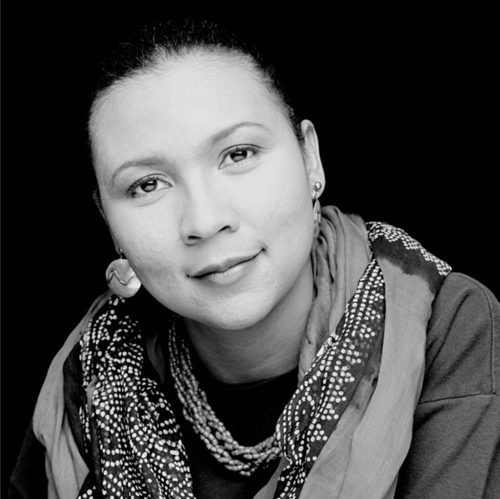
Analysis made with this article:
For the course MAIS 601: Making Sense of Theory in the Humanities and Social Sciences of Dr. Derek Briton
For this reflective analysis, I chose to examine the reading Theory as Liberatory Practice written by bell hooks. I had a strong surprise reaction when I learned the way women of colors perceived themselves and internalized their pain, low self-esteem, and oppression resulting from living with a white supremacist capitalist patriarchy. Moreover, I was shocked about learning how they policed each other, shared ideas, debated, and denied theory because they considered it less important. The refusal to focus on intellectual research was surprising for me. Furthermore, I found it shocking that some high-status academics often appropriated the women of colors work without proper recognition in their research projects. Also, she highlighted the opposition mechanism of marginalized people regarding the use of elitist jargon in theory. I realized the impacts of this practice on individuals who were less privileged.
During my reading, I felt a reciprocity with her when she mentioned being “The Demonic Little Figure” during her childhood because of my suffering and repression I experienced from my family during my teenage years concerning my coming out as gay and debates about 2SLGBTQIA+ issues. These events pushed me to study social work later in my life. Finaly, I noticed a feeling of joviality when she explained why children were the best theorists.
Regarding the academic hierarchy and the appropriation of the work done by women of colors, I experienced feelings of shame, revolt, and ressentiment because it contradicted the progressivist vision I had for feminism and the goals it embodies. I was naive in the past to believe that feminists did not use academic oppression and to associate human kindness with this movement.
In the matter of the subversion praxis, or the relations between talk and action, I perceived a resistance and perplexity because the emphasis on powerful actions done by women and men of colors was useful to abolish the slavery, instill civil rights, and decrease the segregation. The necessity of theorizing suffering has a strong resonance today because of the evolution of complexity issues.
Before reading this article, my perception of creating theory was related to the scientific process and critical thinking that emphasizes facts and proofs. I focused on neutrality, curiosity, and chilling emotional detachment. I realized the impacts of my biochemistry background on the way I conceptualize theory. In addition, associating children with theorization was absurd for me because I made the connection between university research and this concept.
In terms of bias, I-as-student and I-as-former-biochemist had this reductionist bias at the beginning of my reading when I habituated the separation of intellectual theory from healing. I found these two topics difficult to reconcile with, and I was skeptical about the concept of theory as healing because of my scientific background. The production of hierarchy created by the academic feminism created a tension, a betrayal between I-as-student and I-as-feminist-ally. I thought that feminism was exempt from this kind of domination approach. When bell hooks explained her story with her family, I—as gay and I—as liberal felt a similar tension caused by the patriarchal norm disruption with my family when I was a teenager. The use of an instrumental theory that served only the intellectual created a paradoxical dissonance between I-as-student and I-as-liberal. I—as gay and I—as liberal was considered “The Demonic Little Figure,” and I had to live with the punishment consequences of coming out with my family and the medical professionals. Finally, I-as-liberal and I-as-student had this representational bias and stereotyping concerning the women of colors community in the sense that I was convinced that creating theory, debating, and sharing ideas were a mainstream approach in their community and that it was not reduced to silence of policing.
After analyzing this reading, I realized with curiosity and hope that suffering is a powerful catalyst that pushes us to create and understand theory for a personal and collective healing process. During my education journey in social work, I noticed a neglect concerning the professor’s emphasis on the relationships between social workers and, in this case, women of colors. It would have been pertinent to understand effectively their internal psychological patterns related to the internalization of the white supremacist patriarchy and their consequences during my bachelor’s journey. I feel that her approach has enlightened the shadow created by the intellectualism that we found at university.
After the reading, I particularly appreciate comparing this approach to the TV program Tout le monde en parle in Quebec, like a large “dinner party” event where every actor, even the more silent or shy, can express themselves around the table for a maximal impact. An interdisciplinary researcher must observe and minimally guide discussions in a safe space, like the concept of the movie The Help, which describes the fight of Black women domestic workers in the 60s in the United States. I now desire to use the same approach as hooke to democratize theory and to write more inclusively to be sure that we analyze oppressions lived by individuals. I can see that this mechanism of elitist intellectualism has some echoes with what the Gen Z men who are less educated and less privileged are suffering nowadays.
Reference
hooks, b. (1991). Theory as liberatory practice. Yale Journal of Law and Feminism, 4(1). 1–12.
#feminism #feminist #women #womenofcolor #black #blackwomen #theory #healing
 Sebastien Prud'Homme Master of Arts in Interdisciplinary Studies E-Portfolio
Leave a comment