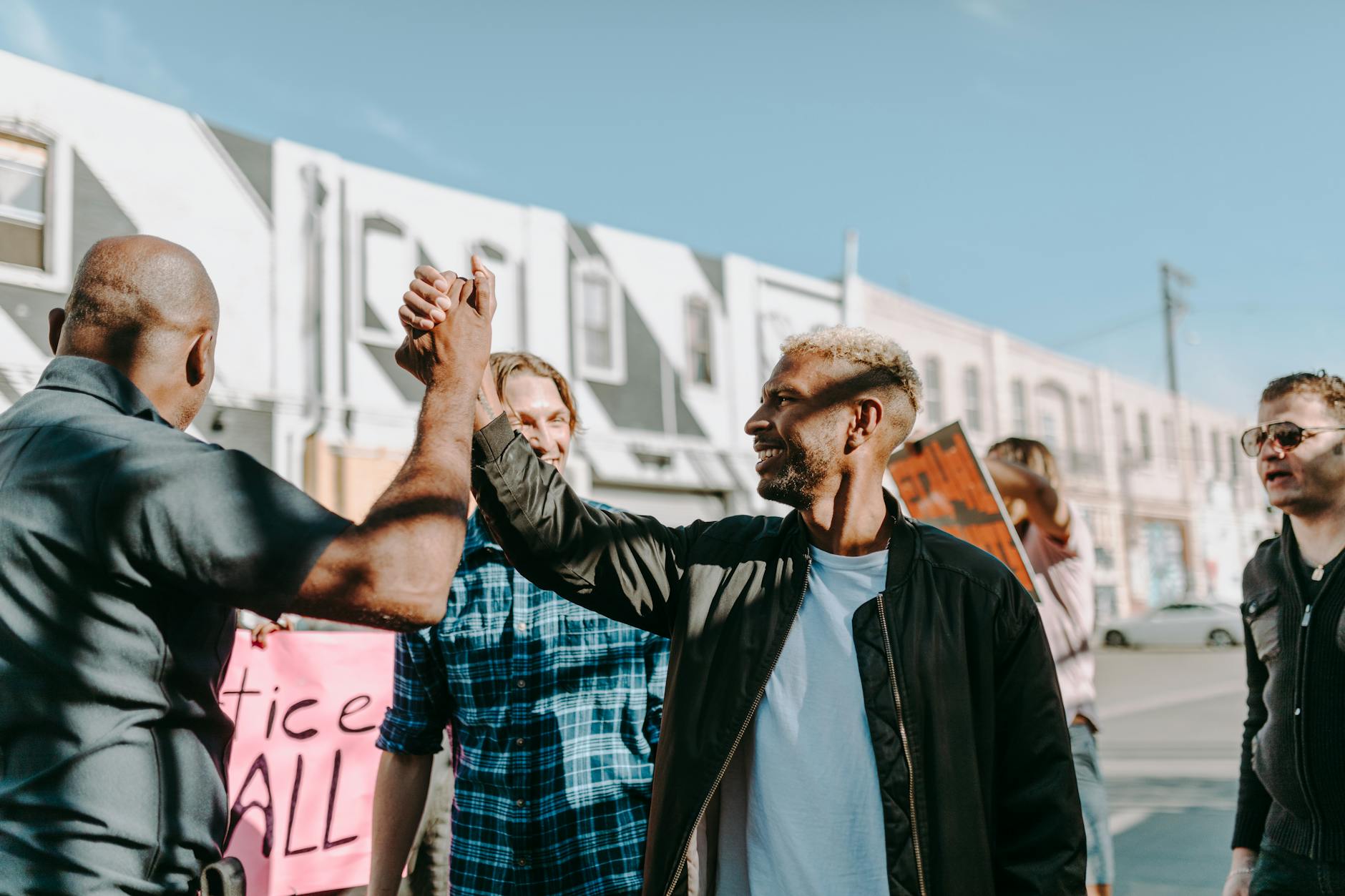
Gen Z masculinity reinvention is possible when it is co-created by men for men, using their own new, original language. They need a different definition of the “provider”, a post-meritocratic identity, a prosocial traditionalism, and a biopsychosocial agility, far from biological determinism.
Sebastien Prud’Homme
Master of Arts in Interdisciplinary Studies
Athabasca University
MAIS 601 Course: Making Sense of Theory in the Humanities and Social Sciences
Reflection for Dr. Derek Briton
February 7th , 2026
During my master’s degree, I plan to work on the community studies focus area because we need to reflect and take actions locally on how, as a society, we could address positively and durably the needs of Gen Z men that have mutated. For one year, masculinity’s situation has shifted towards the far right, radicalization, disinformation, conspiracy theories, and critical thinking deficits. During my social work studies, I had integrated numerous progressivist sociological concepts. However, there is the young men crisis that must be addressed in terms of education, technological transparency, mental health, and social connections.
During the last year, I realized the distress and frustration of young men around me about their own life goals and the lack of customized services for them. Because of my background in science, I realized the damages of their lack of critical thinking with the proliferation of fake news and conspiracy theories. This master’s degree is a meaningful way to use my interests in sociology, mental health, and sciences to act. During my internship, I interviewed a community worker of the social program Bien dans mes baskets [Well in my sneakers], which guided teenage males in Montreal to improve their mental health, school involvement, and sense of belonging through the practice of team sports. When I was a community organizer for the nonprofit CRIC [Intercultural Resource Hub] in Montreal, I saw the benefits of building an immigrant men’s peer mentorship program, Hommes-Relais [Men-liaisons], by creating social connections and using horizontal-level relationships. I noticed the advantages of this kind of program on the immigrant women’s side, Femmes-Relais [Women-liaisons].
The primary question I want to deep dive into is how community development practices could become useful to people around the nonprofit sector. Secondly, I want to find solutions on how we could mobilize Gen Z men and other actors around these questions, how these young men could auto-transform themselves, and how they could learn and build effectively, with their own language, a positive masculinity in the field. In my focus area, I will be investigating the possible improvements of our current social systems and the top-down effects we could prevent. Additionally, I will create the social transformation by mobilizing and developing alternative learnings.
In this journey, I will work on community psychology, peer-led mutual aid, inclusive masculinities, intersectionality, and marginalities. I will also investigate a provider reform through the socio-economy. Heterodox economics could be used to reflect on a post-meritocratic identity. In my opinion, I could not work on these issues without taking into consideration the religious field for a prosocial traditionalism and the digital sociology. Moreover, I will investigate education to promote alternative credentialing and applied sciences to shift the hegemonic masculine physicality towards a dynamic and evolving body model not embodied in a rigid biological determinism.
In the publication In the community development around the world of Campfens (1999), the author mentioned that to end the cycle of alienation (e.g., the digital revolution), social groups must work on the community development. I believe that young men must create a community alternative to the manosphere. Moreover, algorithms act as the new “institutionalists” to serve powerful capitalist organizations, leading them in an isolation loop, and the current institutions do not respond adequately to their alienation. In the meantime, influencers use the radicalization funnel, the Alinsky tactic, to monetize rage through radicalization. This is why I would like to focus on men’s mutual aid and their conscientization, a concept developed by Paulo Freire.
Furthermore, I think that young men must debate publicly with other individuals from different perspectives to start thinking about important issues like Slavoj Žiźek mentioned in the video Don’t Act. Just Think, Big Think in 2009. This masculinity crisis necessitates the concept of self-organizing communities of Jack Meek (2001) because institutions can no longer adequately address Gen Z men’s issues (disconjunctive state concept), and there is a decline of trust.
To conclude, there is a sense of theory in my focus area when we collectively perform a retrospection by speaking and organizing for the goal of preparing the community. We identify specific elements in our chaotic environment to build a map for shifting our anxiety to actions (Weick et al., 2005). How could we react to the systematic rejection of our university research from certain men to improve our society? How would we start discussions with Gen Z men with a more powerful artificial intelligence that will attain the singularity soon? I think everyone would win by focusing on this community development because we will reach a social stability.
References
Big Think. (2009, July 27). Slavoj Žižek: Don’t act. Just think. [Video]. YouTube. https://www.youtube.com/watch?v=IgR6uaVqWsQ
Campfens, H. (Ed.). (1999). Section from Part II: International review of community development: Theory and practice . In Community development around the world: Practice, theory, research, training (pp. 25–40). University of Toronto Press.
CREMIS. (n.d.). Qu’est-ce que Bien dans mes baskets? [What is “Well in my sneakers”?]. Bien dans mes baskets: où en sommes-nous? https://cremis.ca/publications-et- outils/dossiers/bien-dans-mes-baskets-ou-en-sommes-nous/quest-ce-que-bien-dans-mes- baskets
CRIC Centre-Sud. (n.d.). Hommes-relais [Men-liaisons]. https://criccentresud.org/projets/hommes-relais
Weick, K. E., Sutcliffe, K. M., & Obstfeld, D. (2005). Organizing and the Process of Sensemaking.
 Sebastien Prud'Homme Master of Arts in Interdisciplinary Studies E-Portfolio
Leave a comment