
This week, I have read the Part II: International review of community development: Theory and practice in the book Community development around the world: Practice, theory, research, training of Hubert Campfens. This book analyzed community development in six countries and was done by forty authors.
The author explained the tension between the order (societal guidance) and the emancipation (oppositional movements). The societal guidance comes from the technical reason and scientific planning (e.g., UN agencies, NGOs, and the state) guided by social Darwinism. On the contrary, opposition movements mean a collective action to challenge the state and hierarchical relations (e.g., confrontational politics, utopianism/disengagement, and mutual aid). He also explained the moral imperative that the world must be understood through the eyes of the oppressed (by their lived experience) and the importance of having a “Listening Expert.” Moreover, he explained the importance of adopting social learning to let the population decide in a social stability (The Friedmann Framework).
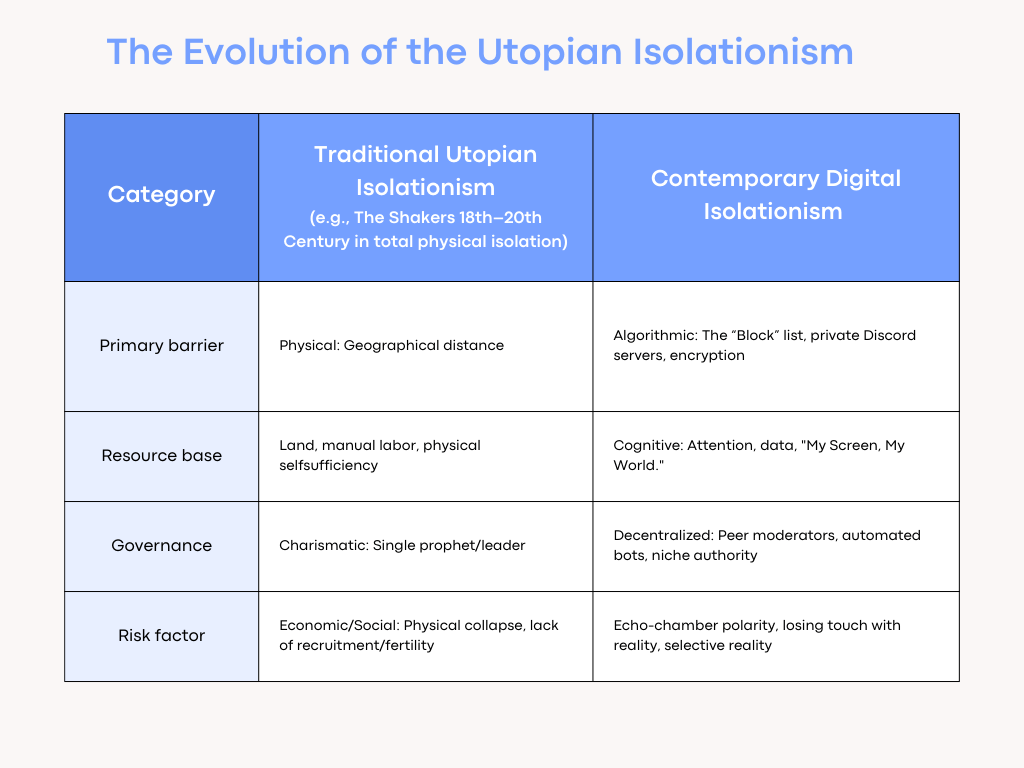
Because I want to work on the crisis of connection living by Gen Z men, I could compare it to a shift from a physical community to an “alienating, oppressive, competitive, and individualistic society” dominated by capitalist organizations for profit. Currently, social media algorithms act like institutionalists (with societal guidance rather than transforming the society toward emancipation). However, oppositional movements here are the far right and the manosphere. For example, influencers monetize rage to mobilize actions, such as harassment and hate. I could draw parallels with the utopian isolationism that risks becoming totalitarian and oppressive for the men inside his own red pill algorithm. In my case, conscientization, in-person mutual aid, and peer support are examples of solutions to restore social connections, far from the digital world.
Reference: Take This. (2023, August). Extremism: The radicalization funnel in gaming [Infographic]. https://www.takethis.org/wp-content/uploads/2023/08/etremism_graphics_DHS_radicalization-funnel.png
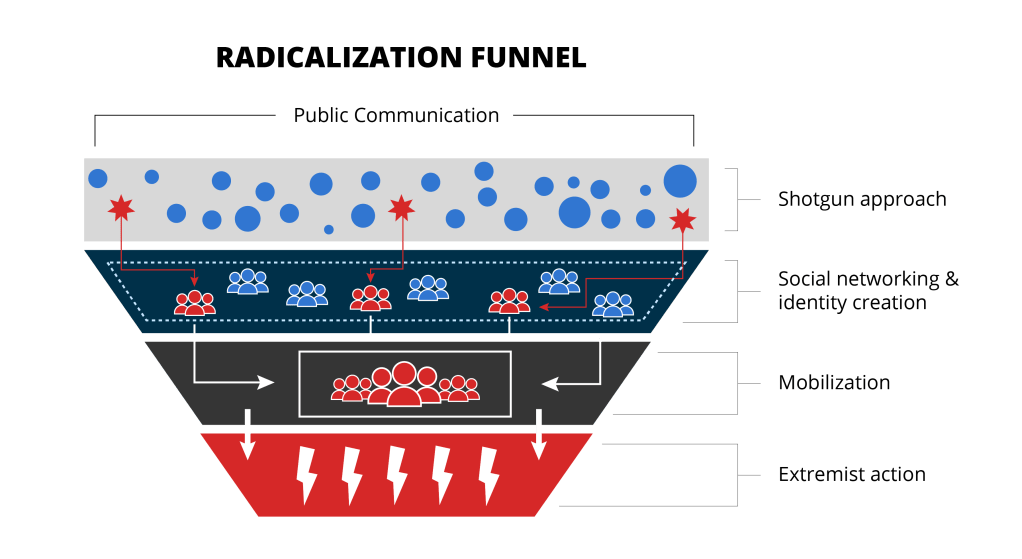
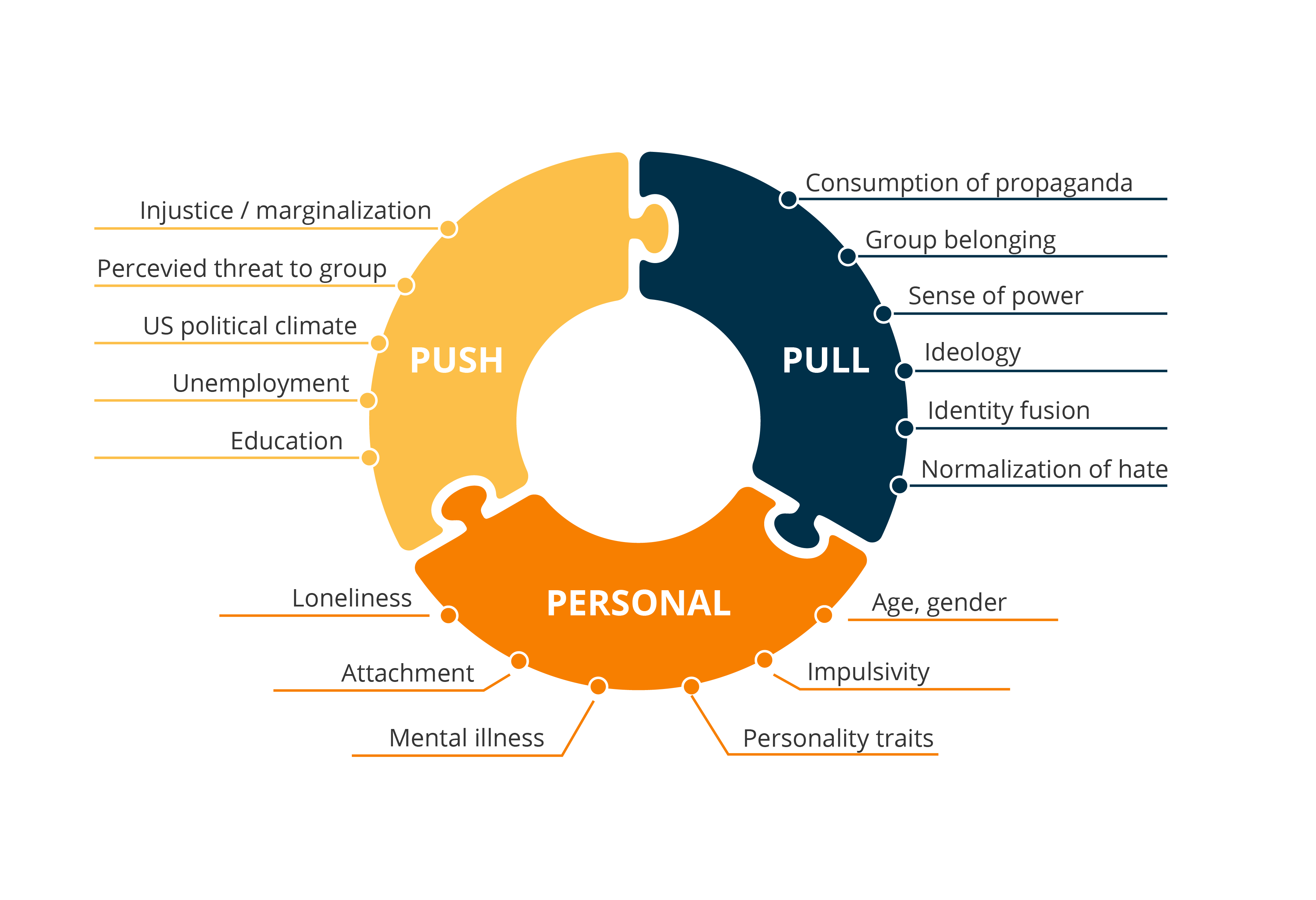
Above, you see the radicalization funnel (Alinsky Tactic), where influencers monetize hate, and Gen Z men blame feminism and liberalism to fuel the discontent and identify their pain (loneliness, economic anxiety). After that, there is a mobilization in actions (harassment, hate, etc.). The last image represents the individual vulnerabilities leading to radicalization.
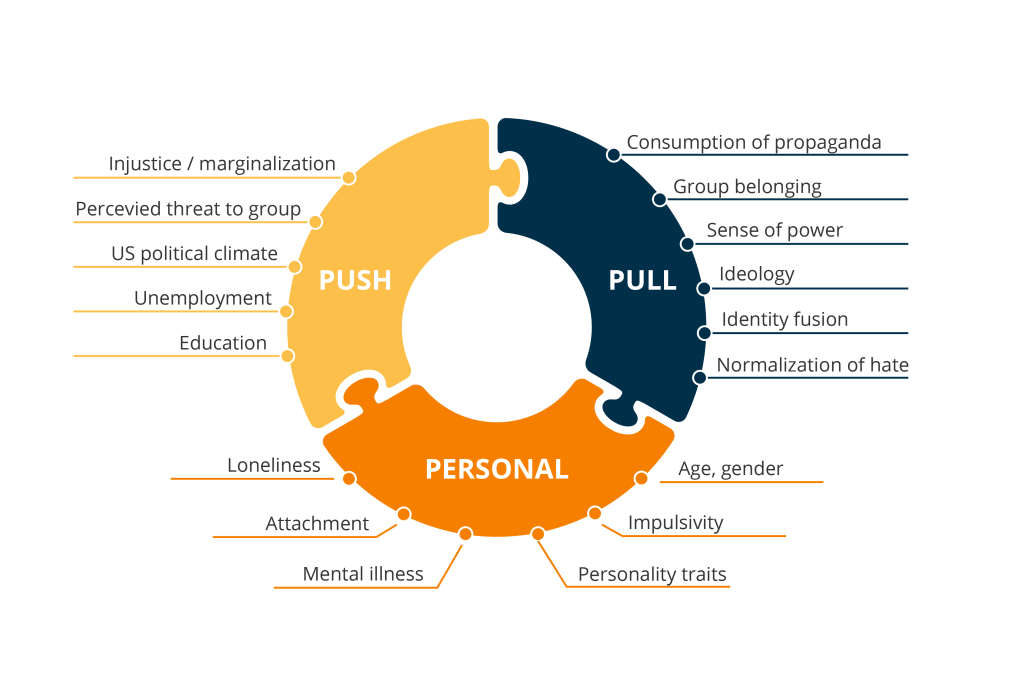
Reference: Take This. (2023, August). Extremism: Vulnerabilities and radicalization in gaming [Infographic]. https://www.takethis.org/wp-content/uploads/2023/08/etremism_graphics_DHS_vulnerabilities.png
Reference
Campfens, H. (Ed.). (1999). Section from Part II: International review of community development: Theory and practice . In Community development around the world: Practice, theory, research, training (pp. 25–40). University of Toronto Press.
 Sebastien Prud'Homme Master of Arts in Interdisciplinary Studies E-Portfolio
Leave a comment