


My Education and Experience
How Social Work Changed the Way I See the World?

Integrating Digital Intelligence & Community Resilience Through Positive Masculinity
My Goals of Cocreation and Empowerment with Gen Z Men
During the journey of my master’s degree in interdisciplinary studies, I want to deepen my knowledge concerning the masculinity crisis that Gen Z men are facing. I want to understand the impacts of social media and artificial intelligence on their mental health. Moreover, I wish to codevelop social, professional, and educational strategies with them to empower young men in the respect of women and other minorities. I hope to bring solutions to decrease their isolation and increase their social connections. My ultimate goal would be to encourage them to adopt critical thinking and positive masculinity in their lives.
Latests Posts
-

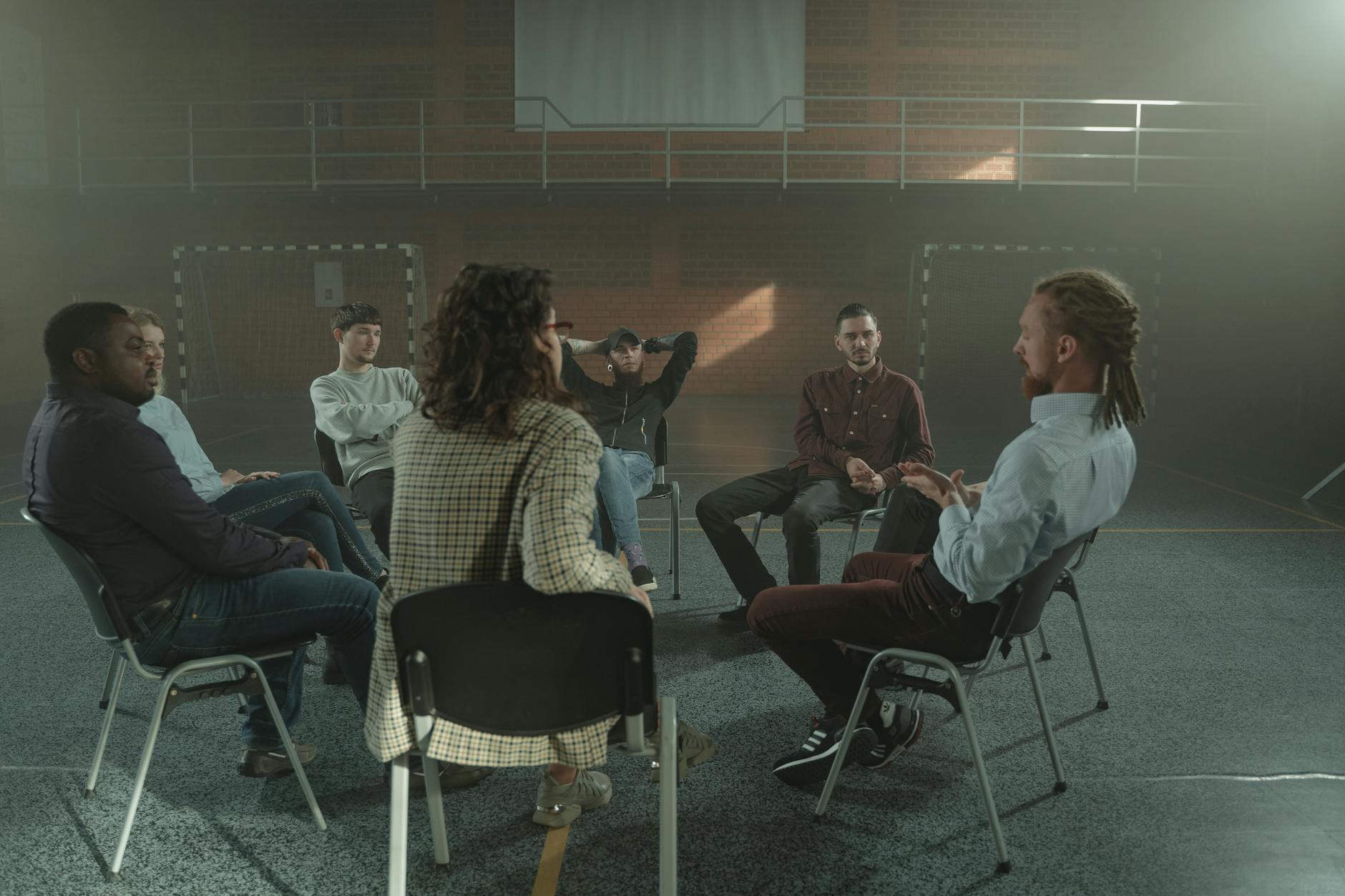
Photo by cottonbro studio on Pexels.com My Reflective Narrative
Master of Arts in Interdisciplinary Studies
Athabasca UniversityMAIS 601: Making Sense of Theory in the Humanities and Social Sciences
For Dr. Derek BritonApril 18th, 2026
AbstractThis reflective narrative describes an interdisciplinary journey from reductionism to social work theories. This study explores an internal dialogue that shifts from positivism through epistemological humility and theory democratization. By analyzing critical theory concepts, such as those of Foucault, Žižek, and Freire, this paper investigates the Gen Z masculinity crisis caused by digital alienation and an algorithm funnel vision of social media. The Men-Core Hub is a nonprofit organization in Vancouver with the mission of decreasing social isolation, empowering men, and building social connections. With the goals of promoting solidarity and autonomy, the organization aims to alleviate the nihilism of the manosphere and indirectly emancipate society.
Keywords: Gen Z masculinity, Community Developpement, mental health, social media algorithms, mentorship, friendship circles
- The Epistemological Baseline
In 2025, the rise of the far right around the world shook me to my core. In this first part, I am going to explain how my background in kinesiology (and figure skating), biochemistry, and social work do create a tension when I observe the situation of Gen Z men in 2026. I began the course motivated to create an impact on masculinity.
For ten years, the practice of figure skating had become a tool of control, with judges’ eyes and surveillance mixed with high performance. When Foucault (1977) explained the concept of “docile bodies”, I recognize the impact on my world view, characterized by “individuals conditioned to conform, submit and perform according to externally imposed norms.” Learned docility and blinded compliance internalize self-surveillance and obedience, causing mental health issues (Gerdin & Pringle, 2025). Habermas’s instrumental rationality is another theoretical lens that treats athletes as products in the sense that they are only a measurement of performance rather than complex human beings (Belling, 2025). Finally, I defined myself almost like an aesthetic product.
Predominantly, I was impacted by reductionism, positivism, and post-positivism, which emphasize empirical validity and robustness. During the MAIS601 course, I realized how my mind was shaped by the importance of data, hypothesis testing, and logic with decompositional analyses. I completely ignored personal, historical, and sociopolitical contexts. In biochemistry, it is necessary to adopt this mindset because hierarchy is dominated by the accuracy of scientific work. Using and focusing on repetitive scientific methodology as almost a religious practice, I felt Foucault’s panopticon of using method as a disciplinary power, especially in the pharmaceutical industry (Salzmann-Erikson, 2024).
In 2017, I decided to change my career to social work because it was a way to use my suffering as a queer gay man to help others. It was a painful coming out that resonated with me and caused mental and social issues that I still suffer from today. My relationship with theory changed drastically, focusing on feminist standpoint theory, intersectionality, and anti-oppressive practices. In social work, theory allows me to “zoom out” to reach the best intervention through a progressist lens to improve the human condition. It also shifted my thinking toward post-structuralist queer theory by challenging heteronormativity and cisnormativity. Post-structuralism made me question the structures of society (Seelman et al., 2021).
During the course, my vision of the theory changed to include the lived experience of individuals through a theory of democratization (hooks). I felt a connection with bell hooks (1991) when she wrote, “I came to theory desperate, wanting to comprehend-to grasp what was happening around and within me. Most importantly, I wanted to make the hurt go away.” I share several similarities with her concern regarding the importance of accessibility and comprehension of theory for all individuals in society. Even though the new generation of young men is not a minority, I noticed some similarities concerning the intensification of nihilism, repressed rage, and internalized phobias.
Even though I studied the effects of societal structures on citizens during my Bachelor of Social Work, I understood the role of science like never before with Adorno and Horkheimer’s critical theory concept of the culture industry. Their critique of positivism resonates with me when they explain that ” the blindness and dumbness of the data to which positivism reduces the world pass over into language itself, which restricts itself to recording those data” (Adorno & Horkheimer, 1944).
Being proactive, Žižek challenged my thoughts on the importance of debating before taking action. The manipulation of science by the establishment during the covid and masculinity crises has led to a mistrust of the neutral position usually held by institutions and a chaotic and terrifying reality. Our shared space of public and universal truth called the “big Other” has been replaced by an “obscene big Other” where fake news, conspiracy theories, and rumors are spread in public space. Because the reality is too hard to handle, “better an evil God than no God” provides a joyful satisfaction for skeptical men using violence to express their frustration and humiliation (Žižek, 2021).
The refreshing digital humanism of Lanier gave me hope, but I found the situation alarming with the societal insanity caused by algorithms. When we hear masculinists speak, we feel a lack of empathetic communication and egoism in their speech. They do not realize that they are being manipulated by tech companies with fear in a funnel vision (Hattenstone, 2023). With the postmodernist concept of interpassivity during this new algorithm and AI era, I feel that the younger generation is trapped in alienation or a lack of liberation of revolution. They are prisoners because their relationship with reality decreases annually (Van Oenen, 2006).
The goal of my narrative reflection is to explore how to use the teaching I learned in the MAIS 601 course to empower men through community development in a nonprofit setting. As an interdisciplinary practitioner, my unique background has led me to view the manosphere through the lens of critical thinking deficiency and social constructivist theory.
- The Analysis of My Internal Dialogue
Since the beginning of the course MAIS 601, there has been a psychological struggle between two identities: one more reductionist and progressist advocacy (I-start) and the other informed by epistemological humility and the democratization of theory (I-now). I-start was anxious and afraid to improve my knowledge of the young generation of men because of my background in social work, where feminism and anti-oppressive practices occupied a major part of my education. However, I-now felt a social responsibility to act in this matter because I-now am an empathetic man with lived experience of social and mental health struggles. I-now believe that I can relate to the situation of men of all ages in finding solutions to help empower them.
I-start noticed discomfort with the freedom of speech of the far right in different media. I noticed that I-start was more inclined to act and engage in fewer debates. However, I-now understand that taking immediate action without debate is close to oppression. Unfortunately, the far left has used past strategies such as ostracism or shaming (cancel culture), creating obstacles for theorizing, debating, and engaging. I-now believe that we must take the time to debate equitably and feel uncomfortable to achieve social progress. It is really moving past the “In-group/Out-group” binary to create a space for engagement between each part without shaming.
Before the course, I-start struggled with individuals who had “anti-science” rhetoric. It was the same situation when I heard remarks from men of the manosphere or from leftist people. I-start required empirical validity and robustness. I-start did not understand why I-start should care about information opinions that are not backed by science. I-now understand in this course with Sheldrake that sometimes, science acts as a tool of power when some mathematical or physical constants are not debatable (Sheldrake, 2013).
If we teach men how to improve their critical thinking, their scientific mind, and to find the truth, would we reinforce the same “disciplinary power” I felt when I was an athletic figure skater? When I was Biochemist or even as student in social work, I craved for the “Big Other” and the meaning of data. However, MAIS601 made me realize that scientific methodology can act as a religious practice and an obstacle to the democratization of theory. The outcome of this course must be that I-now have to consider the opinions of skeptical individuals without judging them.
Concerning bias, I-start had, I would mention this one related to affectivity because my emotions were affected by the manosphere, homophobia, and the rise of the far right. In the news headlines, I-start perceived targeting of the 2SLGBTQ+ community, and my brain perceived it as a direct threat to my life. Because of my bachelor’s degree in social work, the I-start had an In-group/Out-group bias because we focused on anti-oppressive practice, feminist standpoint theory, and other topics related to minorities, that relate to “oppressors” and “oppressed.” I-start associated men as an out-group related to patriarchy and was not aware of their struggles and digital alienation.
Regarding Rupert Sheldrake’s TED talk The Science Delusion, I-start found it ridiculous and esoteric. I-start rejected the dogmatic and pseudo-religious role of science because I learned that robust truths must always be challenged. I-start found that Sheldrake’s “morphic resonance” lacked empirical evidence and robustness. I-start must admit that I had a positivist and materialist bias in this research. I-start expressed a certainty bias because his TED Talk threatened my stable “big Other” in my mind. After watching the YouTube video Consciousness, Mysteries Beyond Spacetime, and Waking up from the Dream of Life of Hoffman, I-now is now open to the possibility that consciousness is a fundamental reality with a virtual “interface” of our material world. I-now qualify this shift as epistemological humility because materialistic science is not the best explanation of our reality.
Bagean’s information racketeers’ concept is appropriate to explain the digital situation of young men if you zoom out at a macro level an I-now feel more informed and conscious about this trap. Research, media, and political institutions are managed by the elite, where any rebellion is absorbed. They monetize fear and spectacle, manipulate institutional research, and weaponize marginalized free speech. The social media hate spectacle is a way to keep the population blind to elite actions with a pseudo-feeling of accomplishment by users. Consequently, skeptical young men are trapped in this spectacle cyberspace vacuum made by a conservative and progressive illusion controlled by the oligarchs (Bageant, 2011).
Concerning my reflection on the manosphere as an algorithm product, I-start decided to read and learn about the manosphere’s characteristics. I-now feel alarmed, especially concerning the black pill, INCEL, or involuntarily celibate men. I am concerned about their nihilistic worldview, hostility toward women, and fascination with mass killings. However, I-now feel bitter and regretful about the situation of masculinity worldwide, and I-now notice this classification to be reductionist and somewhat rigid. In my opinion, I-now would classify men on a manosphere continuum. I-now feel it is important to emphasize helping men build relationships in the real world and develop their own personal strengths rather than focusing on social constructivism (Rollano, 2025).
Slowly, the left and right converge toward epistemic relativism. The theologian James K. A. Smith explained effectively what happens when the left and right are stocked in the post-modernism where science is rejected by both: “We will see that much that goes under the banner of postmodern philosophy has one eye on ancient and medieval sources and constitutes a significant recovery of premodern ways of knowing, being, and doing” (Smith, as cited in Pluckrose, 2017)
After reading and analyzing the article AI Agents Are Recruiting Humans To Observe The Offline World, I-now realized the victimhood of skeptical individuals who believe they are smarter than others and are victims of the funnel vision of social media algorithms that shift them to the political right. On the MAIS 601 forum, a student asked me to consider the situation in which the AI bubble bursts. Should we discuss digital educational strategies? The student’s comment shifted my thinking concerning finding solutions for the reality of extremism, and I-now feel demoralized by this colossal issue. In fact, I-now do not think AI will disappear, and I-now believe tech companies will push for complete virtual reality. I-now think that mental issues will aggravate for the youngest generation. My concern is nihilistic violent extremism and how we can prevent and neutralize this situation (Global Internet Forum to Counter Terrorism, 2026). In other words, we need to create “alternative networks” (Castells) and “critical pedagogy” (Freire) to help Gen Z men.
- The Theoros Exercise
In this scenario, the Theoros, named Benjamin, 45 years old, spent 10 years working as a Biochemist in the research and development of multiple pharmaceutical businesses. He recently took a sabbatical to start thinking about changing his career and studying social sciences in his city, East Vancouver. Benjamin is defined by his nonjudgmental, calm, and observer personality.
It is currently raining in Vancouver at 10 degrees. On Commercial Drive, there is a community center where a few intoxicated homeless people are seated in front of. Benjamin entered the facility. Inside, there is a room with huge windows, a picture of a group of men on the wall, low ambient electronic music, surrounded by numerous plants, and we can see a baby foot and pool tables. We smell hot coffee mixed with natural mint oil diffused by a vegan device. Benjamin sat in the back of the room and observes Liam sitting in the circle of a peer support group. It is the beginning of the session, and he did not sleep enough this week.
Liam is 21 years old, a Grade 11 graduate, socially isolated, a regular marijuana smoker, and clinically depressed. He broke up with his girlfriend 1 year ago, is following the red pill group, and has a social media addiction. He has slumped shoulders, and Benjamin notices the empty eyes of Liam in interpassive alienation. The mobile phones of all men are placed in a specific box far from the circle. There is a long silence, as if in-person meeting was abnormal.
Benjamin noticed that the facilitator use the theory as liberatory practice by mentioning the importance of setting a goal of healing for this meeting. He invites men not to be shy to share their opinions and disagreements with the rest of the group. The facilitator shared a story of his own struggle with digital addiction. He discusses his professional goals, school challenges, and fatherhood role.
He spoke about the negative impacts of social media on his life between 2010 and 2020. He talked about his cocaine consummation and how he finished at the emergency room. He explains how he overcame his digital addiction and improved his social connections. He encourages men to discuss their experiences. Benjamin found that the facilitator uses slangs and urban vocabulary to ease the communication and avoid scientific jargon. After 15 minutes, Liam spoke for the first time, about his frustration about women because his girlfriend cheated on him and stole money from him. He felt the need to be part of these Red Pill groups. Benjamin felt the emotion and resonance (hooks, 1994).
Benjamin noticed that the facilitator uses the social-constructivism with the support group. The facilitator mentioned to the group that they do not have a “fixed” personality, meaning that their current struggles and labels are always mutating depending on their environment. The facilitator asked the participants to express their opinions about the red pill group and how the media transformed their lives. He empowers them to name damaging situations and find alternative solutions that reflect their personal values (Burr, 2015).
During the session, Benjamin found that the facilitator adopted a co-investigator posture with men to talk about a specific problem. The facilitator asked the participants to discuss their current struggles and stay focused on the immediate, not the past. He invites men to name possible solutions. Benjamin believes that this approach empowers men to not remain passive and to use critical consciousness (Freire, 2018).
At the end of this session, Benjamin closes his notebook and realizes that the manosphere is a structural failure that can be rebuilt by men like him. Young men can understand the power relationship between technology and algorithms, and this process can be reversed. They realize the power of reconnection.
- Community Development and Simulated Praxis
Here is the zoom out of the Theoros Exercise analysis with the role of the non-profit Men-Core Hub where Liam is a member. Its mission is to cultivate an alternative network of men to break social isolation, be better informed, and promote personal growth. It also helps men empower their masculinity through shared activities, creating mentorship, learning critical thinking, and understanding how social contexts impact their lives. With this nonprofit, there will be a community kitchen, friendship conversation circle, mentoring, workshops, outreach in high schools and post-secondary institutions, sports activities, and training for mentors.
In Canada, Gen Z is the age group with the most mental health challenges (Sun Life, 2026). Gen Z spends nine hours on screens per day (DemandSage, 2026). In early 2026, 54% of Gen Z reported being exposed to fake news and misinformation, and 47% reported being exposed to violent threats online (Beauchere, 2026). In Canada, 87% of cyber-hate events are perpetrated by men and boys (StatCan, 2026). In Vancouver, YMCA found that 77% of adults aged between 26 and 34 reported a lack of community connection. Even though East Vancouver is one of the most progressive neighborhoods in the city, Gen Z men tend to live in microsuites with high renting costs. Concerning the dropout rate of post-secondary programs, it is estimated at 22% for youth in Vancouver (McCreary Centre Society, 2025). All these statistics could fuel the nihilism among Gen Z.
The masculinity crisis and the manosphere show that “Men should not be portrayed as brutal oppressors but as weak beings whose macho exterior covers up their frailty and impotence. And women should learn to treat men like that. A strong man is the only true feminist—he doesn’t need to oppress women in order to assert himself.”( Žižek, 2022). This situation is also a symptom of the deterioration and disaster of paternal figure. The Men-Core Hub is here to allow conscientization about the funnel effect of social media leading to the bully archetype and its consequences on everyone. It is a place to understand how these platforms, podcasts, and videos monetize to the detriment of their mental health (Lanier, 2024). Moreover, they could realize that they are part of a non-consensual digital spectacle fueled by their skepticism that serves left/right politicians and elites (Bageant, 2011).
Many young men have learned to live in an individualist, capitalist, and hyper-competitive society. The Men-Core Hub could help transform the human solidarity of the group to minimize their mental health struggles by fostering support and collaboration. For example, during peer mentorship sessions and circle discussions, democracy and consensus control structures will play a central role. From passivity to proactivity, participants will become “Acting Subjects” impacting their own environment with the support of the group. In this way, a counter-narrative will be built rather than victimhood behavior galvanized by algorithms. Even though digital communities offer emancipation at first, they lead to the creation of closed groups, echo chambers, that become oppressive and totalitarian (Campfens, 1999).
4.1 Discussion with stakeholders
After a few months of observation, Benjamin decided to become the Executive Director of Men-Core Hub while completing his bachelor’s degree in social work. In the meeting room of the Men-Core Hub, Benjamin must defend the budget of the nonprofit in front of a grant review committee. After alarming statistics concerning Gen Z men’s mental health and the rise of online violence, your nonprofit was targeted for this discussion.
The committee is composed by Henry, a Senior Planner from the City of Vancouver in charge of the project “Housing First”, Dr. Mitchel, a Clinical Lead from Vancouver Coastal Health expert in pharmacological data, and Agent Suzy, a Federal Analyst from Public Safety Canada alarmed by the phenomenon of the manosphere and radicalization.
Henry starts the discussion: “Hi Benjamin, you know that we currently live in a housing crisis in East Vancouver. We have invested massively in microsuites, and you are asking for significant funding for a community kitchen. Why should we prioritize your community kitchen over building more microunits? What would be the outcome?”. Benjamin (I-now): “Henry, these microsuites create more isolation without addressing the root cause (Foucaultian panopticon). I replied, “With all our technology, they are trapped in interpassivity. They spend nine hours a day on screens and algorithms that affect their mental health. The kitchen requires in-person participation, moving vulnerable men from being passive (docile body concept) to proactive (Active Subject concept) who share moments in reality. It is not just a question of feeding them, it is also sharing positive and deep conversation with them”.
Dr Mitchel said, “Benjamin, you know the clinical reality because you were a former biochemist. We noticed a 50% increase in the use of antidepressants among Gen Z men (Sun Life, 2026). Why should we prioritize sports activities and friendship conversation circles over medical interventions? Where is the scientific robustness of your intervention? ” Benjamin (I-now): I used to consider data before, but we cannot minimize the social context that causes their suffering. At the Men-Core Hub, the use of sports is noncompetitive and valorizes solidarity to minimize nihilism; thus, we are rebuilding the person and their aspirations.
Agent Suzy stated, “I am very concerned about the Manosphere. You know that 87% of cyber-hate crimes are committed by boys and men (StatCan, 2026). We need an educational program that teaches and corrects misinformation. Why should we prioritize school outreach ?” Benjamin (I-now): “Suzy, the top-down or vertical approach does not work and it could activate the In-group/Out-group bias that increase the radicalization. Using critical pedagogy (Freire, 2018), men co-investigate with students how rage monetization works. Additionally, we provided them with tools to avoid the “funnel effect” of social media and to understand the Bully Archetype in their own way. In this way, they restore their epistemic autonomy to avoid extremism.
- Letter to My Future Self
Dear Sebastien,
It is April 2031, and I am writing this letter because I know that you have successfully completed your master’s degree in interdisciplinary studies at Athabasca University through hard work. You gained a better understanding of masculinity among Gen Z and learned about local educational strategies in the nonprofit sector. In addition, you completed some courses related to individuals with different abilities.
I know that you used your lived experience, weaknesses, failures, strengths, and skills to help men regain control of their own autonomy and lives. You gained more knowledge of topics related to masculinity, paternity, digital humanism, and technology. You understood and deconstructed your biases. Additionally, you are applying the democratization of the theory in your daily life.
You built your nonprofit organization that works with vulnerable men. You have helped hundreds of young men understand their relationship with the digital world, improve their relationships, improve their mental health, and their vision of paternity. Indirectly, you have impacted the emancipation of women, the 2SLGBTQ+ community, and the cultural diversity communities.
In 2036, I think you will witness the stories of young men who struggled and found a way to heal themselves because you built your nonprofit. Because you decided to complete training to help individuals with diverse abilities return to come back in the workforce, you will apply your knowledge to the masculinities situation.
With pride,
Sebastien from the pastReferences
Adorno, T., & Horkheimer, M. (1944). The culture industry: Enlightenment as mass deception. In Dialectic of enlightenment. Marxists Internet Archive.
Bageant, J. (2011, January). America: Y ur peeps b so dum? Ignorance and courage in the age of Lady Gaga. ColdType, 2–9. https://www.coldtype.net/Assets.11/pdfs/0111.Joe.Culture.pdf
Beauchere, J. (2026, February 9). Safer Internet Day 2026: More Gen Zers flourished online in 2025 as digital well-being crept higher. Snap Inc. https://values.snap.com/news/safer- internet-day-2026
Belling, A. (2025). Talented footballers’ identity in the age of professionalization of academies and sports school programmes in Norway. Soccer & Society, 26(8), 1405–1421. https://doi.org/10.1080/14660970.2025.2559298
Burr, V. (2015). Social constructionism (3rd ed.). Routledge.
Campfens, H. (Ed.). (1999). Section from Part II: International review of community development: Theory and practice. In Community development around the world: Practice, theory, research, training (pp. 25–40). University of Toronto Press.
DemandSage. (2026, March 9). Average screen time statistics 2026: By age & country. https://www.demandsage.com/screen-time-statistics/
Foucault, M. (1977). Discipline and punish: The birth of the prison (A. Sheridan, Trans.). Random House.
Freire, P. (2018). Pedagogy of the oppressed (M. B. Ramos, Trans.). Bloomsbury Academic. (Original work published 1970).
Gerdin, G., & Pringle, R. (2025). Ethical coaching and athlete transitions – A Foucauldian perspective on high-performance sports. Frontiers in Sports and Active Living, 7, Article 1675173. https://doi.org/10.3389/fspor.2025.1675173
Hattenstone, S. (2023, March 23). Tech guru Jaron Lanier: ‘The danger isn’t that AI destroys us. It’s that it drives us insane’. The Guardian. https://www.theguardian.com/technology/2023/mar/23/tech-guru-jaron-lanier-the-danger- isnt-that-ai-destroys-us-its-that-it-drives-us-insane
hooks, b. (1994). Theory as liberatory practice. In Teaching to transgress: Education as the practice of freedom (pp. 59–75). Routledge.
Kango, U. (2025). Algorithmic governance. In W. Xu (Ed.), Handbook of human-centered artificial intelligence. Springer. https://doi.org/10.1007/978-981-97-8440-0_90-1
McCreary Centre Society. (2025). Youth transitioning out of care in Metro Vancouver: 2025 update. McCreary Centre Society. https://mcs.bc.ca/pdf/ytoc_metro_vancouver_2025_update.pdf
Pluckrose, H. (2017, March 27). How French “intellectuals” ruined the West: Postmodernism and its impact, explained. Areo Magazine.
Rollano, C., Pérez-González, J.-C., & Román-González, M. (2025). The situated manosphere: A systematic review and meta-ethnographic study of misogynist communities on platforms. OSF Preprints. https://doi.org/10.31235/osf.io/kvjr5
Singh, A. B., & Engeness, I. (2021). Examining instructors’ roles in facilitating students’ learning process in pedagogical information and communication technology massive open online course. Cultural-Historical Psychology, 17(2), 76–89.
Statistics Canada. (2026, March 30). The Daily — Police-reported hate crime in Canada, 2024. Government of Canada. https://www150.statcan.gc.ca/n1/daily- quotidien/260330/dq260330a-eng.htm
Thaler, R. H., & Sunstein, C. R. (2021). Nudge: The final edition. Yale University Press.
Vaidhyanathan, S. (2018). Anti-social media: How Facebook disconnects us and undermines democracy. Oxford University Press.
Wellman, B. (2001). Physical place and cyberplace: The rise of personalized networking. International Journal of Urban and Regional Research, 25(2), 227–252. https://doi.org/10.1111/1468-2427.00309
Žižek, S. (2021, September 20). Les non-dupes errent. The Philosophical Salon. https://www.thephilosophicalsalon.com/les-non-dupes-errent/
-
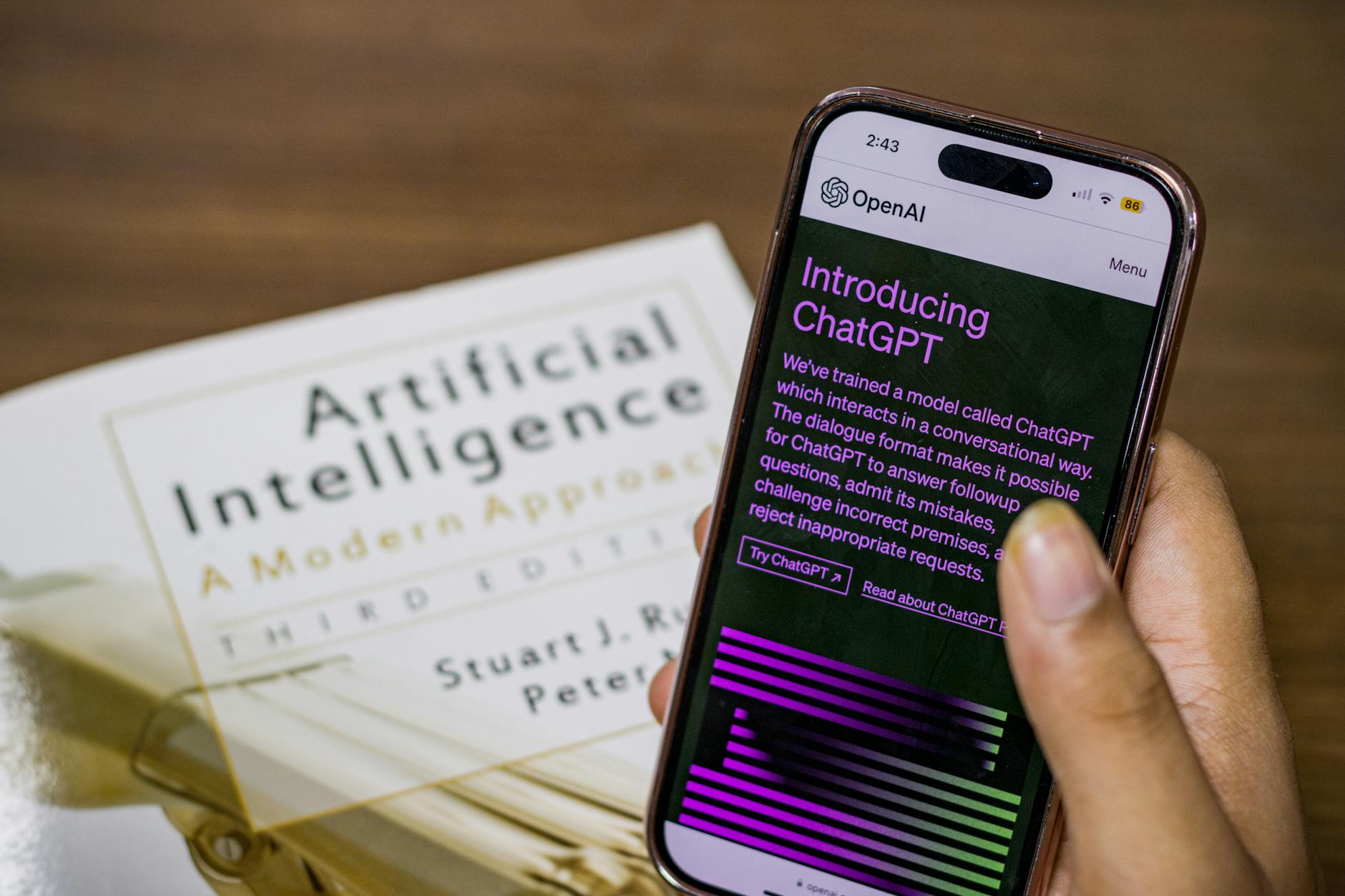
Photo by Sanket Mishra on Pexels.com Critical Reflection Essay created for Dr Derek Briton, professor of the Course MAIS 601 at Athabasca University.
Analysis of the article the Tech guru Jaron Lanier: ‘The danger isn’t that AI destroys us. It’s that it drives us insane’ of Staff, TyN magazine.
Lanier explains in his article how algorithms and AI drive us insane because of our social behavior with digital tools. Although algorithms affect our creativity and our perception of politics, I have observed that they increase solidarity and allow freedom of speech when used correctly, which otherwise leads individuals to isolation. Additionally, I have noticed their relevance for health issue advice in my daily life. However, I agree when Lanier comparing the previous decades situation with the current funnel effect when he said: “We were directly connected to a choice base that was actually larger instead of being fed this thing through this funnel that somebody else controls.”. This convergence has led to the creation of a bully archetype, and we have the responsibility to stop this ocean of misinformation and save our creativity. For my future research on Gen Z men, I could study the democratization of critical thinking with new technology tools by bringing in-person meaningful community experiences.
In 2025, Kango explained that algorithmic governance “is transforming the way decisions are made, rules are enforced, and behavior is regulated.”. The funnel effect of Lanier affects how algorithms act as choice architects that organize social media with the power of the agenda of authority (Thaler, 2021). Ultimately, this architecture creates a bully archetype with high visibility on social media because it rewards domination, provocation, and insults with a form of entertainment, as we can see on the platform X, for instance (Vaidhyanathan, 2018). Regarding positive outcomes, we have seen regulation related to chatbots that led to teenage suicides, the use of non-consensual deepfake porn-generated imagery, and artist copyrights. In the future, we must focus on ecological, logical errors, and biosecurity threats.
In the algorithmic era, individuals have shifted from groups such as families, neighborhoods, or churches to a core networked individualism (Wellman, 2001). Based on this concept, Siddiq et al. (2024) explained that “digital agency should be understood not merely as digital literacy, but as an expansive construct encompassing critical thinking, self-regulation, and epistemic agency in digital contexts.” Using a digital agency, individuals can use social media to create community experiences outside the digital world, which would be beneficial for their mental health. However, we must not neglect the loss of shared truth and collective reality, the cost of isolation, decreased empathy, and the impact of the manosphere on individuals’ mental health. Isolation is a phenomenon that has worsened since the Industrial Revolution.
Despite Lanier’s opinion, I disagree with him in the sense that I found numerous support groups and precious advice on conventional social media concerning 2SLGBTQ+ and disability issues that helped me navigate struggling moments in my life with time efficiency and accuracy that would worsen if I did not use social media. However, I feel that the algorithm components have mutated since the last US elections due to big corporations and the rise of the far right. During the last month, I decided to stop consuming short videos on platforms because of this bullying archetype phenomenon. I must admit that I use active conscientiousness and judgement when using these platforms, which act as protection for me.
Regarding the implications of this analysis, we must focus on the development of digital tools to help Generation Z recognize fake news and conspiracy theories. Moreover, community development for and by Gen Z men must be increased, and services adapted to their healthy masculinity must be defined and applied effectively. When I refer to the democratization of critical thinking, I refer to providing tools that can be applied to any type of person with any background.
Question 1: Is digital agency a sufficient solution for individuals or do we need to redesign of the digital architecture itself?
Question 2: Lanier argued that algorithms drive us toward insanity. Concerning Gen Z men, how could we transition from the digital pill’s phenomena into in-person community opportunities without losing their sense of solidarity?
References
Kango, U. (2025). Algorithmic Governance. In: Xu, W. (eds) Handbook of Human-Centered Artificial Intelligence. Springer, Singapore. https://doi.org/10.1007/978-981-97-8440- 0_90-1
Singh, A. B., & Engeness, I. (2021). Examining instructors’ roles in facilitating students’ learning process in pedagogical information and communication technology massive open online course. Cultural-Historical Psychology, 17(2), 76–89.
Thaler, R. H., & Sunstein, C. R. (2021). Nudge: The final edition. Yale University Press.
TyN Magazine. (2024, June 26). Tech guru Jaron Lanier: ‘The danger isn’t that AI destroys us. It’s that it drives us insane’. https://tynmagazine.com/tech-guru-jaron-lanier-the-danger- isnt-that-ai-destroys-us-its-that-it-drives-us-insane/
Vaidhyanathan, S. (2018) Anti-social media : how Facebook disconnects US and undermines democracy. New York, New York: Oxford University Press.
Wellman, B. (2001). Physical place and cyberplace: The rise of personalized networking. International Journal of Urban and Regional Research, 25(2), 227–252. https://doi.org/10.1111/1468-2427.00309
-
I feel that I am like those trees
Scoured by the uranium of bombs
The shifting flow of my tears
Like an atmospheric river
Surging toward the moon
The strangeness of the world around
me
This sensation of being at the center
of the controversy
I no longer hear, no longer look
I prefer the silence, the glacial cold
This blackout that I dream of
Is my life nothing but a hallucination?
 Sebastien – Master of Arts in Interdisciplinary Studies E-Portfolio